

PESTS OR PREDATORS
Know what’s in your field, our insect monitoring system (InSentinel) helps you identify and track over 140 key species, from harmful pests to helpful predators.
The Pests

Brown Planthopper
(Nilaparvata Lugens)
Hosts: Primarily Rice (Oryza sativa)
-
3 to 4.5 mm long
Body slender and light to dark brown
Forewings semi-transparent brown with slightly smoky tips
Abdomen usually dark brown with lighter margins
Eyes reddish-brown
Adult forms include long-winged (macropterous) and short-winged (brachypterous) types
-
Nymphs are creamy-white to light brown, wingless, with distinct red eyes.
Adults jump or fly short distances when disturbed.
Typically found on the lower portions of rice plants.
-
Causes "hopperburn" — rapid yellowing, browning, and death of affected rice plants.
Vectors for Rice Ragged Stunt Virus and Rice Grassy Stunt Virus, leading to stunted growth and significant yield loss.
-
Early detection is critical to prevent population explosions.
Outbreaks occur rapidly under warm, humid conditions.
Monitoring adult flight activity enables timely and effective pest management strategies.

Fall Armyworm Moth
(Spodoptera Frugiperda)
Hosts: maize (corn), rice, sorghum, wheat, sugarcane, cotton, alfalfa, and many vegetables.
-
30–40 mm long as an adult moth
Wingspan 32–40 mm
Forewings grayish-brown with a mix of darker and lighter patterns
Distinct pale or whitish spot near the center of each forewing
Hindwings silvery-white with a narrow dark border
Males are generally darker and more patterned than females
-
Early-stage larvae are light green with a black head; later stages turn brownish with white lines along the body.
The inverted "Y" mark on the head capsule is a key feature for distinguishing Fall Armyworm from similar species.
Active mainly at night; larvae hide in the soil or leaf whorls during the day.
Adult moths are strong fliers and can migrate long distances.
-
Young larvae feed on leaf surfaces, creating "windowpane" damage.
Older larvae cause severe defoliation, large ragged holes in leaves, and destruction of growing points.
Heavy infestations can decimate entire fields, especially maize, reducing yields dramatically.
Frass (larval droppings) often visible near feeding sites.
-
Fall Armyworm populations can grow and spread rapidly, making early detection crucial.
Continuous monitoring allows farmers to apply targeted management before serious damage occurs.
Migration behavior means infestations can appear suddenly in new areas.
Early identification helps minimize pesticide use and crop losses.
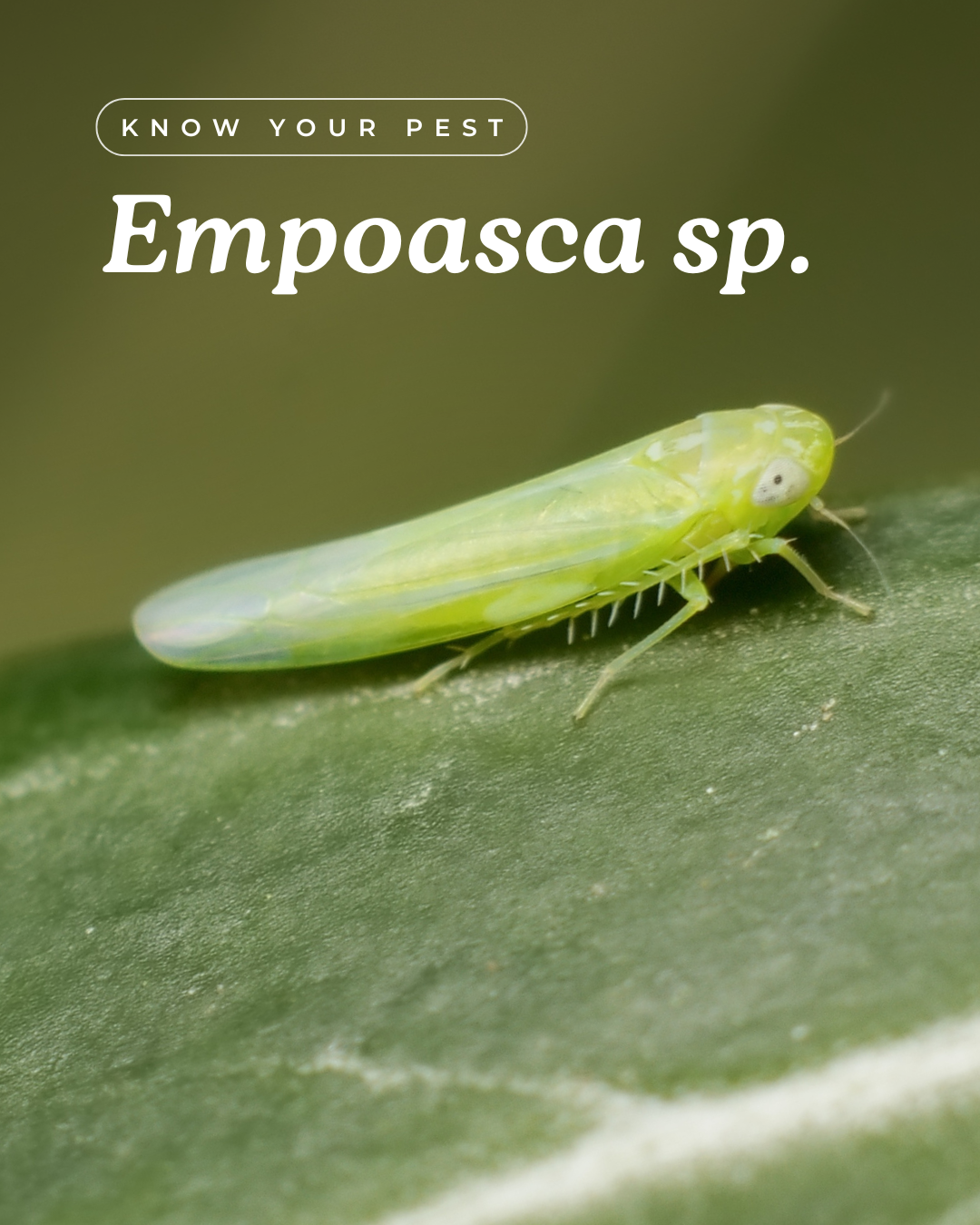
Leafhopper
(Empoasca sp.)
Hosts: Wide range of crops including rice, potato, tea, cotton, soybean, grape, and various vegetables.
-
2–4 mm long
Body slender, green or yellow-green
Wings transparent or lightly tinted, held roof-like over the body
Legs long and spiny, adapted for quick jumping
-
Leafhoppers have a unique habit of scuttling sideways or diagonally across the leaf surface when approached, or quickly jumping and flying away.
They are primarily found on the undersides of leaves, where they feed on plant sap and take shelter from predators and the sun.
Nymphs resemble smaller, wingless versions of the adults and can often be found clustering on the same foliage.
While active during the day, adult leafhoppers are highly attracted to agricultural light traps at night, making them ideal targets for electronic monitoring systems.
-
Instead of chewing holes, leafhoppers pierce plant tissues to suck out sap. Their toxic saliva causes a severe reaction known as "hopperburn"—characterized by rapid yellowing, browning, and curling of leaf edges, eventually leading to plant death.
Aggressive sap depletion by both nymphs and adults stunts plant growth, reduces plant vigor, and leads to significant crop yield losses.
Leafhoppers are highly effective vectors, rapidly spreading destructive viral and bacterial plant diseases as they migrate and feed from plant to plant.
-
Tracking adult activity is a reliable indicator of upcoming nymph outbreaks. Spotting winged adults serves as a critical early warning sign that they will soon lay eggs and trigger a damaging population surge.
Early detection allows for timely, precise intervention. Catching leafhopper activity early empowers you to act before toxic saliva causes irreversible hopperburn or widespread disease transmission.
Adult leafhoppers migrate rapidly on wind currents, massive populations can appear overnight across large farming areas. Tracking their flight and migration patterns is essential for anticipating sudden infestations.
Continuous monitoring reduces pesticide overuse. By tracking specific population thresholds, farmers can ensure they only spray when necessary, protecting the beneficial predators that help keep leafhopper populations in check naturally.
The Predators

Mirid Bug
(Cyrtorhinus lividipennis)
Prey/Target Pests: Planthopper eggs and nymphs, particularly brown planthopper (Nilaparvata lugens) and white-backed planthopper (Sogatella furcifera).
-
3–5 mm long;
Slender, elongated body
Bright green coloration with reddish eyes
Legs long and delicate, adapted for active hunting
-
Small, bright green mirid bug with a narrow, elongated body.
Reddish-colored eyes and fine, delicate legs.
Quick-moving and often seen on rice plants and other grasses.
Adults and nymphs are active hunters, particularly in warm, humid field conditions.
-
Cyrtorhinus lividipennis is a specialist predator of planthopper eggs and young nymphs.
Plays a critical role in suppressing outbreaks of major rice pests like brown planthoppers and white-backed planthoppers.
Contributes significantly to natural biological control in rice ecosystems, reducing the reliance on chemical insecticides.
-
Monitoring populations of C. lividipennis helps assess the field’s natural defense against planthopper surges.
Conservation practices (like selective pesticide use and maintaining habitat diversity) can encourage their presence and effectiveness.
Their abundance often correlates with lower pest densities, supporting sustainable rice production.

Reticulate Lady Beetle
(Heteroneda reticulata)
Prey/Target Pests: Aphids, scale insects, whiteflies, and other soft-bodied pests.
-
5–7 mm long
Body oval, slightly domed
Elytra (wing covers) yellow to orange with a distinctive net-like (reticulated) black pattern
Head and pronotum mostly black with pale margins.
-
Small, oval beetle with yellow to orange wing covers featuring a fine, net-like black pattern.
Head and upper thorax (pronotum) mostly black, edged with lighter markings.
Active during the day, often seen patrolling plant surfaces.
Both adults and larvae are highly mobile and effective predators.
-
Adults and larvae feed voraciously on aphids, scales, whiteflies, and mite eggs.
Play a key role in natural pest regulation across a variety of crops, gardens, and orchards.
Presence of Heteroneda reticulata can greatly reduce the need for chemical insecticides.
-
Monitoring helps assess natural biological control levels in the field.
Supporting lady beetle populations through habitat management (e.g., flowering strips, reduced pesticide use) strengthens Integrated Pest Management (IPM) programs.
Their activity indicates a healthy agroecosystem with strong natural pest suppression.

Ringlegged Earwig
(Euborellia Annulipes)
Prey/Target Pests: Aphids, caterpillars, mites, soft-bodied insects, insect eggs, and decaying organic material.
-
10–16 mm long
Body dark brown to black
Legs pale with distinct dark rings (banded appearance)
Forceps-like pincers at the end of the abdomen (curved in males, straighter in females)
Wings present but rarely used for flight
-
Medium-sized, dark brown to black earwig with pale banded legs.
Characteristic forceps (cerci) at the rear; males have more curved pincers than females.
Nocturnal and hides under debris, bark, or soil during the day.
Occasionally active on plants at night, feeding or seeking shelter.
-
Both nymphs and adults are opportunistic predators, feeding on a variety of soft-bodied insect pests.
Helps naturally regulate populations of aphids, caterpillars, mites, and other agricultural pests.
Also contributes to breaking down organic matter, aiding in soil health.
-
Monitoring Euborellia annulipes populations helps assess the strength of natural pest control in the field.
Encouraging earwig populations through conservation practices (mulching, reduced chemical spraying) can support integrated pest management (IPM) strategies.
Recognizing their presence allows farmers to balance pest control decisions, reducing the need for broad-spectrum pesticides.

What pest problems are you facing?
Share your concerns — we’ll help you identify the species and recommend the right monitoring solution.