
An AI-powered pollination project to support sustainable fruit farming in Vietnam
Why Entomological Research Matters In Agriculture
Entomological research encompasses a wide range of studies delving into the intricate complexities of insects. In recent decades, significant progress has been made in discovering and appreciating insect behaviours, physiology, and evolution. The knowledge uncovered and gathered over the years is not just for academic purposes and keepsake. Humanity’s enhanced understanding of these ecologically vital tiny creatures has also led to groundbreaking advancements in fields such as agriculture and medicine. The works of entomologists are truly indispensable and critical to many real-world applications.
Insects cannot be omitted from the field of agriculture. To many, they are commonly known as the enemy of farmers, as they often feed on crops before the harvesting period. However, it is too naive to think of them in just that way. Not every single insect species is there to harm the plants. Some species are predators of the pests, consuming the harmful pests instead of the crops. The roles that different insect species play in the crop fields are diverse and ever-changing, leaving significant impacts on the quantity and quality of crops yielded. With the upcoming concerns of food security and sustainability, insects should be considered in the equation when addressing modern agricultural developments.
In this growing era of Precision Agriculture (PA), the integration of entomological studies into agricultural development, while progressing, still has areas for improvement. In PA, entomological studies are integrated with technologies such as remote sensing, sensor networks, and machine learning.
A key function that comes out from this combination of entomological studies and technologies is the tracking and forecasting of the populations and movements of insects. Accounting for many environmental factors that influence the outcomes of crop production, the main outcome of this key function is to provide farmers with better guidance on what preventive and immediate reactive measures to take. Overall, it’s meant to be a long-lasting solution, not just a one-off solution.
This is a part of Integrated Pest Management (IPM).
Why head in this direction for pest control solutions?
Agriculture has served as the backbone of humanity’s growth for close to 20,000 years, and will continue to do so in the future. This is why long-term solutions are necessary in agriculture.
Many agricultural-related organisations, both academia and industrial players, have started to work on solutions that aim to protect agriculture in the long term. And RYNAN Smart Agriculture is one of these organisations. In the midst of moving towards the goal of creating a living insect map, RYNAN Smart Agriculture’s technological and scientific development moves beyond simple pest control. Its development is geared towards total ecosystem intelligence, where insects are better valued as contributors to quality yields in agriculture. We find ways to work alongside insects, not counter them.
The RYNAN InSENTINEL ® (Insect Monitoring System)
RYNAN’s InSENTINEL® is a device that lures insects from the crop fields, traps them, and uses a recognition model to identify the species and count of the insects in real-time. This provides a more accurate and highly updated representation of insect trends and distribution on the ground, which is crucial in helping farmers and farm managers understand the best-suited insect control methods for their on-ground situations. They are able to assess the pest situations immediately, instead of having to salvage the problem after the damage is done.

Fig 1. Key features of the RYNAN ® InSENTINEL
To further support entomological research, RYNAN has recently innovated a new version of the Insect Monitoring System, the RYNAN InSENTINEL® 200. Going beyond just the identification and counting of insects, this newer version of the device is capable of drying the trapped insects for specimen analysis. This is highly useful for doing entomological research to better understand the physiology of the insects in your fields.
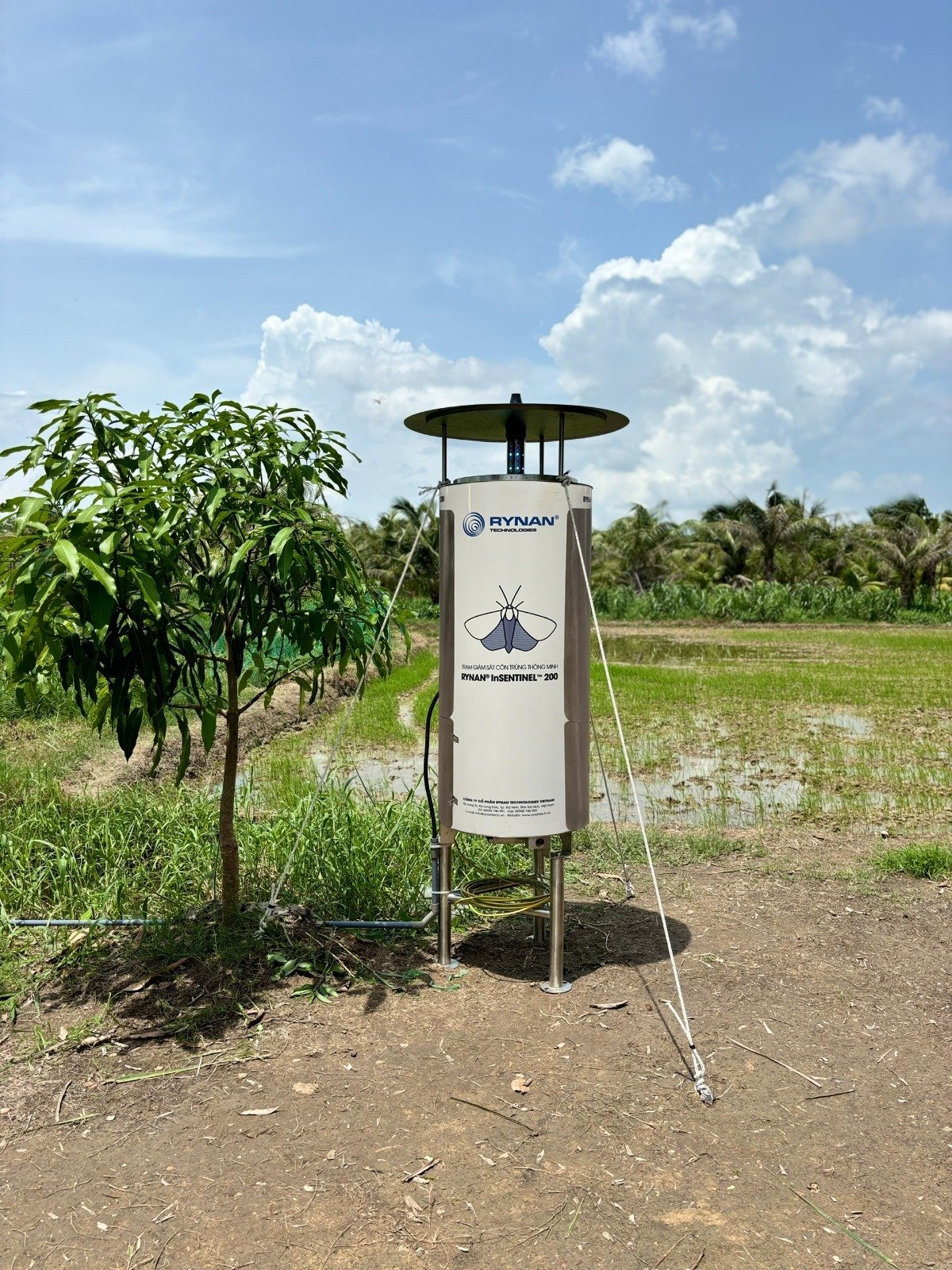
Fig 2. The RYNAN InSENTINEL® 200
Applying Insect Monitoring in real-life
Additionally, RYNAN Smart Agriculture is starting to work on the VietFruitRise project, which is led by the University of Queensland (UQ), and funded by the Aus4Innovation Partnership Grants program. The funding reinforces UQ’s commitment to Vietnam’s national development priorities, including science, technology, and innovation, agriculture and food technology, public health, and capacity building in the higher education sector.
Led by Dr Vo-Doan, the project applies UQ’s advanced research capabilities to a real-world agriculture challenge, aiming to help farmers improve fruit yields while reducing pesticide use and responding to growing climate variability.
Co-investigator Dr Mai Thanh Thai from VinUniversity in Hanoi said smallholder farmers are especially vulnerable to climate-driven changes affecting pollination. Pollination plays a critical role in the propagation of crop plants, supporting agriculture on a larger scale and contributing to billions of dollars annually in global food production.
“When pollination becomes unreliable, it directly affects both productivity and income stability,” Dr Thai said.
Many existing agricultural monitoring systems tend to heavily focus on pests. Hence, this project is strongly aimed at targeting the monitoring of pollination, approaching the issue of insect management in the fields from another pathway. By linking insect activity with flowering patterns and environmental conditions, the system can decide when to spray or avoid spraying depending on the insect situation on the ground.
Dr Vo‑Doan said the idea is to translate new technology, including AI, insect tracking, and insect monitoring, into meaningful information that can inform farmers via a mobile app. He believes that the RYNAN Mekong mobile app is a platform that can serve these functions well for farmers to use.
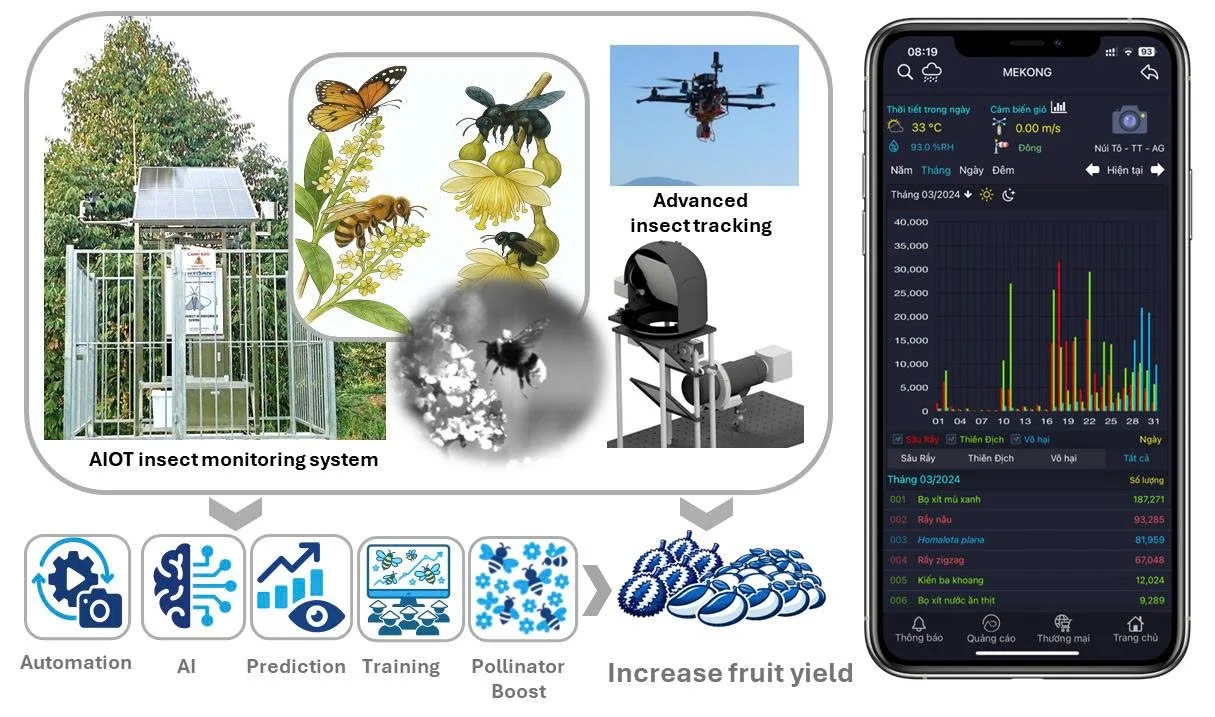
Fig 3. The overview of the Smart Pollination Management (Source: University of Queensland)
Initial pilot trials will take place on two farms in Vietnam, one specializing in mangoes and the other in durians, working closely with Vietnamese government partners and RYNAN Technologies, a collaborator that already has insect monitoring devices deployed across the country. This approach enables the research team to leverage existing infrastructure and develop a model that can be scaled to other regions and crops, if successful. The project will run for just under 2 years, and while the timeframe is not intended to deliver a full commercial product, it is designed to act as a catalyst for future development, investment, and long-term adoption.
If you are looking to pilot such projects, RYNAN Smart Agriculture is happy to work with you on them! Contact us today!